

WDCS

Die WDCS – Whale & Dolphin Conservation Society – ist die weltweit größte gemeinnützige Organisation, die ausschließlich zum Schutz von Walen und Delfinen arbeitet! Obwohl seit 1986 ein internationales Walfangverbot gilt, wurden seitdem mehr als 30.000 Wale gefangen und getötet.

Seit 1986 tötete Japan mehr als 18.000 Wale, Norwegen über 10.000 Wale und Island mehr als 900 Wale… Eine sehr traurige Bilanz. Am meisten bedroht und gejagt werden Finnwale, Zwergwale, Bryde-Wale, Seiwale und Pottwale. Im Rahmen des sogenannten Indigenen Walfangs zusätzlich auch Grönlandwale, Buckelwale und Grauwale.

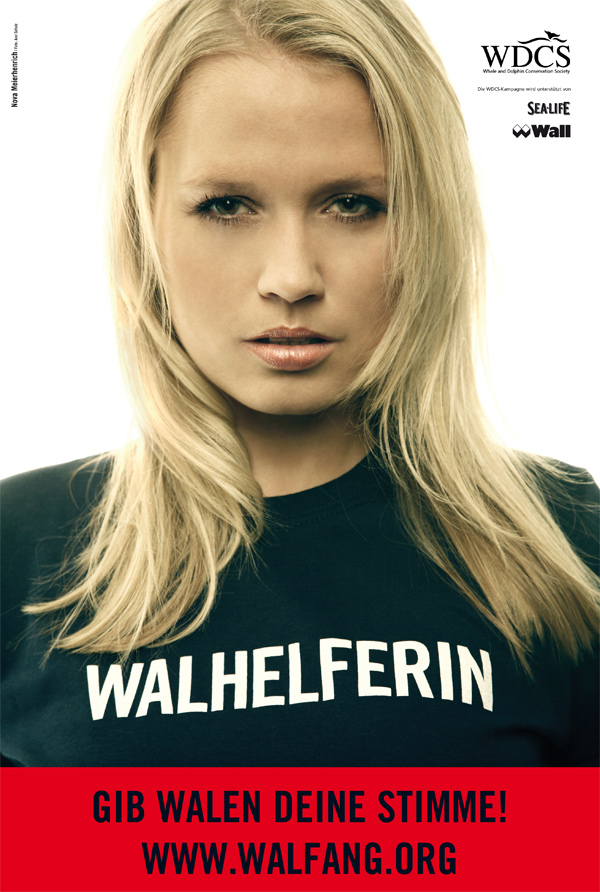
Seit einigen Jahren unterstütze ich die WDCS bei ihrer Arbeit und ganz gezielt die Kampagne „STOPPT WALFANG JETZT“. Und da ich jemand bin, der immer genau wissen möchte wofür er sich einsetzt, hatte ich in den letzten Jahren schon mehrfach das große Glück, Wale in freier Natur beobachten zu können. So hatte ich in Kanada die Gelegenheit mit Walforschern und absoluten Experten auf diesem Gebiet zum beobachten dieser wunderschönen Tiere in See zu stechen – meine Eindrücke werde ich garantiert nie wieder vergessen. Und diese haben mich nur noch mehr bestärkt, dass es die sanften Riesen verdient haben, dass wir ihnen eine Stimme geben, ihren Lebensraum schützen, und alles tun, damit das Morden ein Ende hat!

The Cultural History of Football Betting Explored Through Betzoid

Football and betting have been intertwined for centuries, forming a cultural bond that stretches far beyond the simple act of wagering money on a match result. The relationship between the sport and gambling reflects broader social, economic, and technological transformations that have shaped human civilization. From informal wagers placed on village green contests in medieval England to the sophisticated digital platforms of the modern era, football betting has evolved into a global phenomenon with deep cultural roots. Understanding this history offers not only a window into the sport itself but also into the societies that embraced it, the regulations that shaped it, and the technology that ultimately transformed it beyond recognition.

Origins and Early Development of Football Betting

The earliest forms of football were chaotic, unregulated affairs played across entire towns in medieval Europe. These folk football matches, sometimes involving hundreds of participants, attracted spectators who would place informal wagers on outcomes. In England, such contests were common during Shrovetide festivities, and local merchants, craftsmen, and landowners would bet on their village’s team with the same enthusiasm they brought to cock-fighting or horse racing. Gambling was deeply embedded in the leisure culture of pre-industrial Britain, and football — even in its rudimentary form — was no exception.

The codification of football rules in the mid-nineteenth century, particularly the founding of the Football Association in England in 1863, gave the sport a formal structure that made organized betting far more practical. With standardized rules, defined match durations, and professional clubs emerging in the 1880s, bookmakers began offering odds on football matches in a more systematic way. The Football League, established in 1888, provided a regular calendar of fixtures that gave punters consistent opportunities to wager. By the turn of the twentieth century, football had overtaken horse racing in certain regions as the preferred subject of working-class gambling.

The football pools, introduced in Britain during the 1920s, marked a pivotal moment in the cultural history of football betting. Companies such as Littlewoods, Vernons, and Cope’s invited participants to predict the outcomes of multiple matches for a small weekly stake. The pools were not merely a gambling mechanism — they became a social ritual. Families gathered around the kitchen table on Saturday mornings to fill out their coupons, and the announcement of results on BBC radio became a national event. At their peak in the 1950s and 1960s, the football pools attracted over ten million participants weekly in Britain alone, making them one of the largest gambling enterprises in the world at the time.

The Spread of Football Betting Across Cultures and Continents

While Britain served as the cradle of organized football betting, the practice spread rapidly across Europe and beyond as the sport itself gained international popularity. In Italy, the Totocalcio pools system was introduced in 1946 and quickly became a national institution, with proceeds funding sports infrastructure across the country. In Spain, La Quiniela offered a similar format and generated enormous public participation throughout the latter half of the twentieth century. These systems were not simply gambling mechanisms — they were state-sanctioned revenue tools that tied football betting directly to national sporting development.

In Latin America, football betting took on its own distinctive cultural character. In Brazil and Argentina, informal street bookmakers known as bicheiros and cuentapropistas operated alongside official channels, creating parallel economies of football wagering that were deeply embedded in urban working-class culture. The passion for football in these countries elevated betting from a leisure activity to something approaching a civic ritual, with match predictions debated in cafés, barbershops, and workplaces with an intensity that mirrored political discourse.

Africa and Asia also developed their own football betting cultures as the sport spread through colonial networks and later through global media. In Nigeria, Ghana, and Kenya, sports betting shops became prominent fixtures in urban landscapes from the 1990s onward, reflecting both the intense local passion for football and the economic aspirations of young populations. In countries like China and South Korea, football betting — though subject to strict regulation — became a significant underground industry, with illicit markets handling billions of dollars annually on European league fixtures.

Researchers and analysts studying these patterns have found platforms like https://betzoid.net/ particularly valuable as contemporary examples of how football betting information and analysis have been organized in the digital age, offering comparative odds, historical data, and market insights that reflect the full global scope of modern football wagering culture.

Regulation, Scandal, and the Moral Debate

The cultural history of football betting cannot be told without acknowledging the persistent tensions between gambling and the integrity of the sport. Match-fixing scandals have punctuated football’s history with troubling regularity, from the English First Division fixing scandal of 1964 — which resulted in the lifetime bans of several prominent players — to the Calciopoli affair in Italy in 2006, which implicated top clubs including Juventus in a broader corruption network. In Asia, investigations conducted by Europol and Interpol in the 2010s revealed elaborate match-fixing networks that had manipulated hundreds of matches across multiple continents, demonstrating that the intersection of football and gambling could produce deeply corrosive outcomes.

Regulatory responses to these challenges varied significantly across jurisdictions. In the United Kingdom, a series of Betting and Gaming Acts throughout the twentieth century progressively liberalized and then carefully regulated the gambling industry. The Gambling Act of 2005 represented a landmark moment, creating the Gambling Commission as an independent regulatory body and establishing a licensing framework that brought online operators under formal oversight. This approach was widely studied internationally as a model for balancing commercial freedom with consumer protection and sporting integrity.

The moral debate surrounding football betting has also evolved considerably over time. In the Victorian era, gambling was frequently condemned by religious and temperance movements as a vice that corrupted working-class communities. By the mid-twentieth century, the football pools had become sufficiently normalized that even conservative social commentators viewed them as relatively harmless entertainment. The liberalization of betting shops in Britain in 1961, which allowed licensed premises to operate openly for the first time, signaled a significant cultural shift in how society perceived gambling as a legitimate leisure activity rather than a moral failing.

Contemporary debates have shifted toward concerns about problem gambling, advertising saturation, and the vulnerability of young people to gambling harm. The proliferation of betting sponsorships in professional football — with shirt sponsorships, stadium naming rights, and pervasive television advertising — has prompted calls for stricter controls in several European countries. Italy introduced a comprehensive ban on gambling advertising in sport in 2019, while the United Kingdom has engaged in extended consultations about limiting the visibility of betting brands in football broadcasting and stadium environments.

The Digital Revolution and the Modern Landscape of Football Betting

The emergence of the internet in the late 1990s fundamentally transformed football betting, both culturally and commercially. Online bookmakers could now offer global coverage of matches across dozens of leagues simultaneously, with odds updated in real time and a vast array of betting markets extending far beyond simple match result predictions. The ability to bet on specific scorers, corner counts, booking totals, and minute-by-minute in-play events created an entirely new dimension of engagement with the sport that had no precedent in the era of the football pools or the high street betting shop.

Mobile technology accelerated this transformation dramatically. The widespread adoption of smartphones from approximately 2010 onward meant that football betting became a genuinely portable activity, conducted from stadium seats, pub tables, and living room sofas with equal ease. Live betting, which allows wagers to be placed while a match is in progress with continuously shifting odds, became one of the fastest-growing segments of the market. This development fundamentally changed the rhythm of engagement for many bettors, creating a continuous interactive experience that persisted throughout the ninety minutes of a match rather than concluding at kick-off.

Data analytics and artificial intelligence have introduced yet another layer of sophistication to modern football betting culture. Professional bettors and syndicates now employ statistical models of considerable complexity, drawing on vast databases of historical match data, player performance metrics, weather conditions, and tactical formations to identify value in betting markets. This quantitative approach represents a striking contrast to the intuitive, loyalty-driven betting of earlier generations, where a supporter might simply back their own team regardless of the odds. The democratization of data tools has made some elements of this analytical approach accessible to recreational bettors as well, fundamentally altering the knowledge landscape of the activity.

Cryptocurrency and blockchain technology have begun to influence football betting markets in more recent years, offering anonymous transactions and smart contract-based betting mechanisms that operate outside traditional financial systems. While still a relatively small segment of the overall market, these developments point toward further disruption of established commercial models and raise new questions about regulation, transparency, and the long-term cultural identity of football betting in an increasingly decentralized digital environment.

Conclusion

The cultural history of football betting is, at its core, a story of human engagement with uncertainty, community, and the enduring appeal of the world’s most popular sport. From medieval village wagers to algorithmic trading platforms, the practice has continuously adapted to reflect the technological possibilities and social values of its era. What has remained constant is the fundamental human desire to add an additional layer of personal investment to the spectacle of football — to have not merely an emotional stake in the outcome but a material one. Understanding this history, with all its complexity, contradiction, and cultural richness, is essential for anyone seeking to make sense of football’s place in contemporary global society.

Was genau wir tun, und wie auch ihr ganz einfach Walhelfer oder Delfinpaten werden könnt, erfahrt ihr HIER.